



Module 2:
Qualification Strategies
How Experienced Non-QM Originators Think About Qualification
The Question Every Non-QM Loan Starts With
One of the biggest mistakes loan officers make is starting with products.
Experienced Non-QM originators start with strategy.
Before discussing programs, rates, or lenders, ask a simpler question:
How should this borrower qualify?
The strongest Non-QM solution is usually not the most aggressive option.
It's the option that creates the cleanest path to approval.
In this module, you'll learn the primary qualification strategies used throughout the Non-QM market and when each approach makes the most sense.
Stop Thinking Like an Agency Underwriter
Traditional lending relies heavily on tax returns, W-2s, and standardized income calculations.
Non-QM expands the conversation.
The goal is not to force the borrower into an agency box.
The goal is to identify the most accurate representation of their repayment ability.
Many borrowers have strong financial profiles but don't fit traditional documentation requirements.
That shift opens the door to millions of otherwise overlooked borrowers.
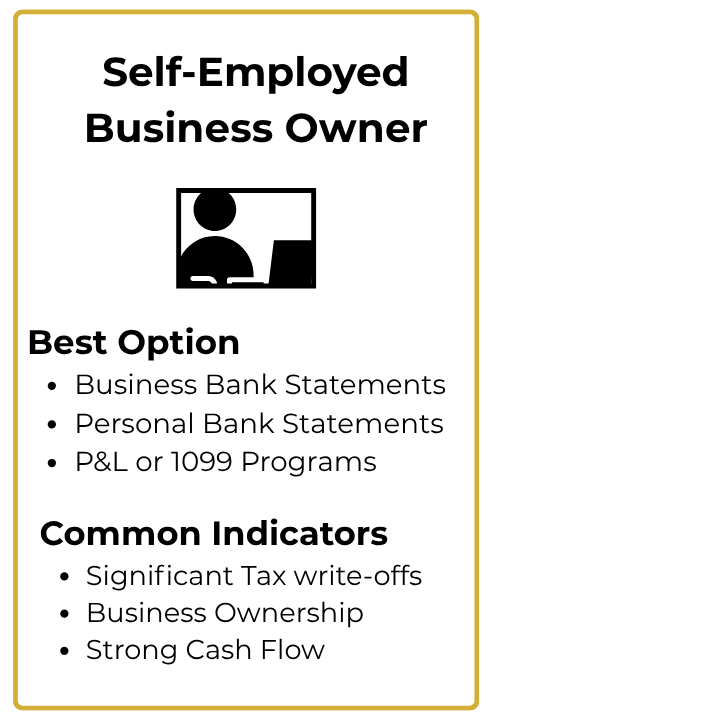
Self-Employed Borrowers

Self-employed borrowers are one of the largest Non-QM opportunities.
Many successful business owners actively reduce taxable income through legitimate deductions and business expenses.
While this may benefit their tax strategy, it often creates challenges when qualifying for traditional financing.
The objective is to evaluate actual cash flow rather than relying exclusively on taxable income.
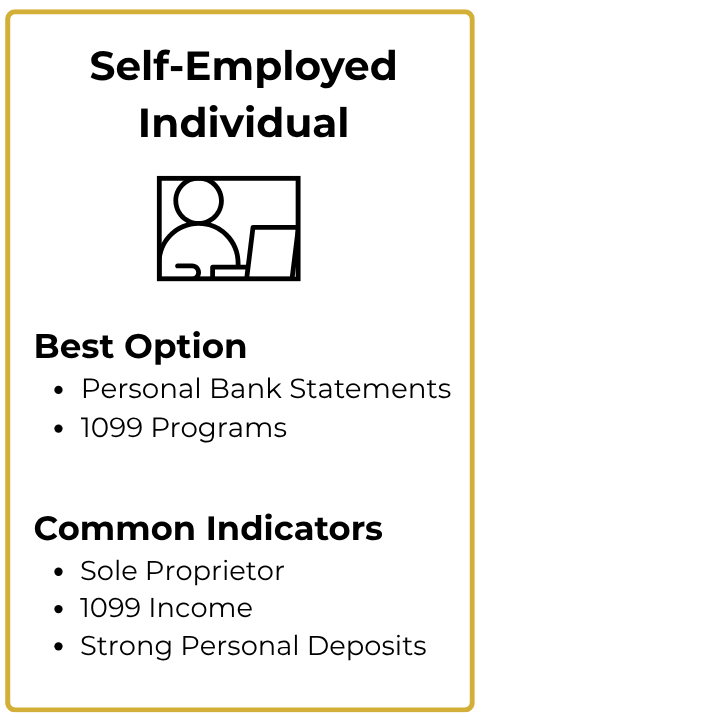
Common qualification methods include:
✓ Business Bank Statements
✓ Personal Bank Statements
✓ Profit & Loss Documentation (where available)
Coaching Note:
Many strong borrowers are declined simply because their tax returns do not tell the full story.
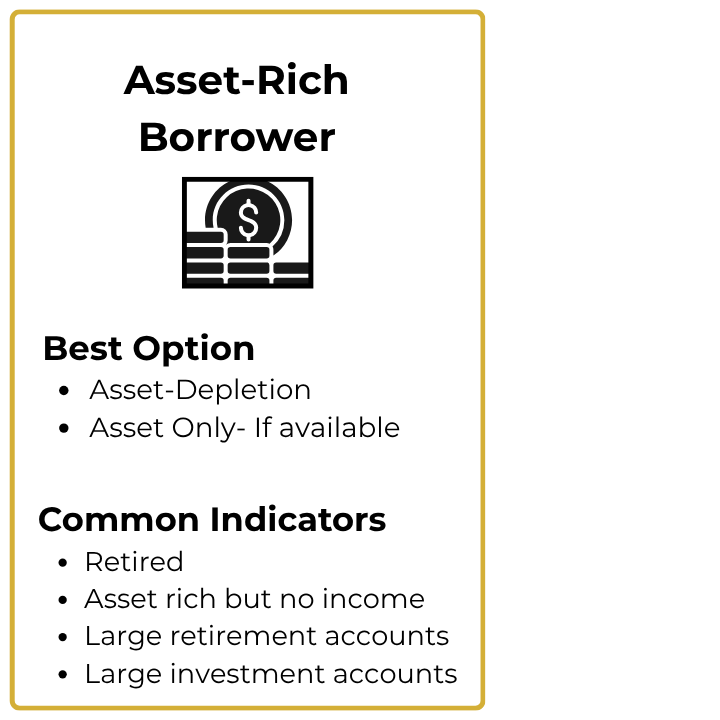
Asset-Based Qualification

Not every borrower relies on monthly employment income.
Some borrowers have accumulated significant assets through:
retirement savings
investments
business sales
inheritance
long-term wealth building.
Asset depletion programs convert eligible assets into qualifying income.
This creates lending opportunities for:
✓ retirees
✓ high-net-worth individuals
✓ semi-retired borrowers
✓ borrowers between careers
When structured correctly, assets alone may provide sufficient repayment ability.
Coaching Note:
Many asset-rich borrowers are overlooked because originators immediately focus on employment income.
Investor Qualification

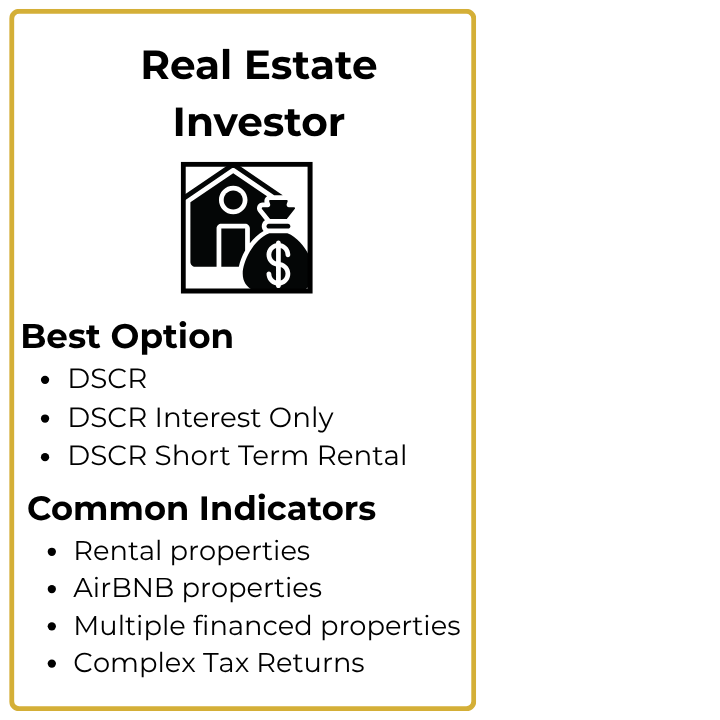
For investors, the property itself often becomes the primary focus.
Debt Service Coverage Ratio (DSCR) programs evaluate whether the property's cash flow can support the proposed mortgage payment.
Rather than qualifying based on personal income, qualification is largely driven by rental performance.
This can dramatically simplify financing for investors with:
✓ multiple properties
✓ complex tax returns
✓ aggressive write-offs
✓ expanding portfolios
Coaching Note:
Many investors qualify more easily through DSCR than through traditional income analysis.
Which Strategy Is Best?
The answer depends entirely on the borrower.
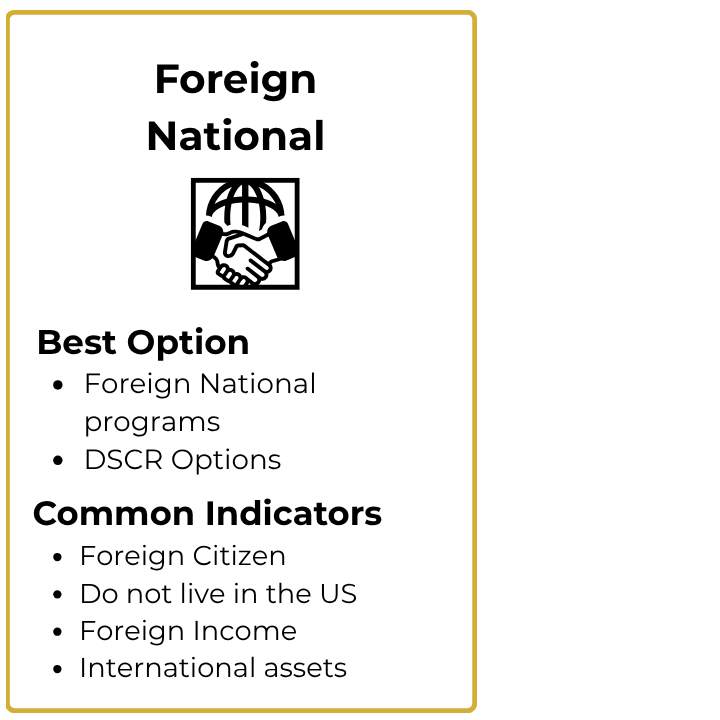
The strongest strategy is usually the one that creates the cleanest and most defensible path to approval.
The Goal is Not Finding a Program
Many loan officers ask:
"What loan program works?"
Experienced Non-QM originators ask:
"What's the best way for this borrower to qualify?"
That subtle difference changes everything.
Products change….
Guidelines change….
Qualification strategy remains the foundation of every successful Non-QM transaction.
Key Takeaways
✓ Qualification strategy comes before product selection
✓ Self-employed borrowers are major Non-QM opportunities
✓ Asset depletion creates solutions for asset-rich borrowers
✓ DSCR allows investors to qualify through property cash flow
✓ The cleanest qualification strategy is usually the strongest one
Before Moving Forward
Now that you understand the primary qualification strategies used throughout Non-QM lending, it's time to take a deeper look at the borrower types that create the greatest opportunity.
In the next section, we'll focus specifically on self-employed borrowers and the qualification methods used to structure them successfully.